A tea label can read like a coded message: FTGFOP1, first flush, single estate, notes of muscatel and green apple. None of it is decoration. Each term describes something real about how the leaf was grown, picked, and finished, and most of it tells you what to expect in the cup before you spend money.
Here is what the words actually mean, and which ones deserve your attention.
Origin: From Country to Garden
Country-level origin is a starting point, not a destination. "India" tells you almost nothing. "Darjeeling" narrows it to a Himalayan district in West Bengal. "Darjeeling, Margaret's Hope, second flush" gives you a garden, a season, and a reputation you can look up. The more specific the label, the more the seller is staking a claim you can test.
Watch for these distinctions:
- Single garden or single estate — leaf from one property, usually processed there. More character, less consistency from year to year.
- Single origin — one country or region, possibly assembled from several gardens within it.
- Blend — leaves from multiple sources, combined for consistency. That is not a criticism; most breakfast teas are blends by design.
Sub-region and elevation matter too. Sri Lankan labels may say "Nuwara Eliya" or "high grown"; Kenyan teas often name a region. Tea that grows slowly at altitude tends to carry more concentrated aroma, which is why "high grown" shows up so often on packaging. Treat it as a useful hint rather than a promise.
Grade: The Letters After the Name
If you learn one thing here, learn this: Orange Pekoe has nothing to do with oranges. It refers to leaf position and size, the young wiry leaves near the bud. Grade letters describe the style and size of the leaf, not its overall quality, and they compare only within one origin and processing style. A high grade from one country does not map neatly onto another.
The classic black tea scale runs roughly like this, biggest and tippiest first:
- SFTGFOP, FTGFOP, TGFOP — long whole leaves with plenty of golden or silvery tips; delicate, aromatic, usually brewed lighter.
- GFOP, FOP — whole leaf with fewer tips, still elegant.
- OP, Pekoe — larger, plainer leaf; steady and straightforward.
- BOP, BP, BOPF, fannings, dust — broken or powdered leaf. Stronger and faster to brew, standard in tea bags and milk-heavy blends.
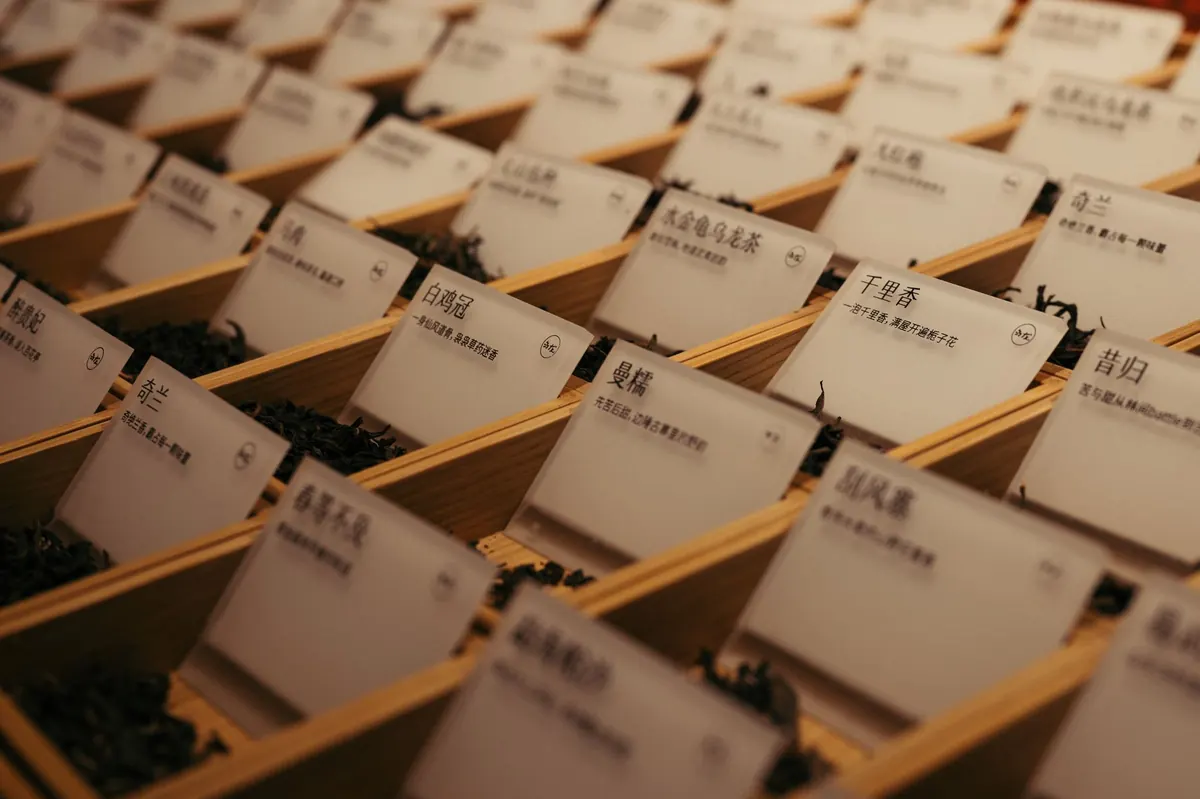
Other traditions use other systems. Japanese teas are named by style — matcha, gyokuro, sencha — and matcha is typically graded as ceremonial or culinary. Chinese teas usually carry a poetic name plus a house grade such as "special" or "first grade," and those grades are set by the seller, not by an international standard. When a grade looks inflated and vague, treat it as marketing and look at the harvest date instead.
Harvest and Flush: The Season in Your Cup
"Flush" means a period of growth. In Darjeeling, first flush is picked in spring and gives a light, brisk, often floral cup. Second flush arrives in early summer with rounder body and the muscatel character the region is known for. An autumn flush is softer and more mellow. In Japan, shincha marks the first pick of the year, prized for its fresh green liveliness.
Season labels are the most useful freshness clue on a package, more useful than "best before," which is often set generously. A green tea harvested two years ago will taste flat no matter what the grade says. Some teas do not have a flush in the same sense: a roasted oolong may be labeled by roast date, a pu-erh by vintage.
Date versus wording
Look for a harvest year or a packed-on date. "Spring 2025" is information. "Fresh" is a mood.
Flavor Notes: Tasting Shorthand, Not Ingredients
When a label promises honey, orchid, chestnut, or wet stone, it is not claiming added flavoring. It is shorthand from whoever tasted the batch, pointing your attention in a direction. Muscatel, cocoa, and malt turn up on Assam and second-flush Darjeeling; chestnut and marine notes on Japanese greens; stone fruit and orchid on Taiwanese oolongs.
Use those notes as a guide to brewing as much as buying. A tea described as delicate usually wants cooler water and a shorter steep. One described as malty and brisk can take boiling water and a splash of milk. If the description sounds like your kind of tea, buy a small amount first and see whether your own tasting agrees.
What the Label Usually Leaves Out
Storage and packaging get printed far less often than they should. An opaque, airtight, resealable pouch protects leaf much better than a paper box or a clear jar on a sunny shelf. Broken leaf and dust go stale quickly; whole leaf holds up longer but still fades.
Certifications carry their own meaning. An organic claim says something about how the tea was grown under a particular standard, not about how it tastes. Words like "premium," "artisan," and "luxury" are largely unregulated. When a package shouts those and stays quiet about origin and harvest, that is your answer.
A Practical Checklist Before You Buy
- Can you find the origin down to a region or garden?
- Is there a harvest date or year?
- Does the grade match the style — read as a size and style descriptor, not a score?
- Do the flavor notes point toward something you actually enjoy drinking?
- Is the packaging opaque and airtight, and is the quantity small enough to finish while it is fresh?
Labels reward a little patience. You do not need to memorize every acronym. You need three things: where it came from, when it was picked, and whether the description sounds like your kind of tea. Keep a simple notebook of what you drink — origin, harvest, brewing time and temperature — and within a few months your own notes will beat anything printed on the shelf.
Photo: 征宇 郑 / Pexels