Gongfu brewing is less a ceremony than a conversation. You use more leaf than you expect, a pot small enough to hold in one hand, and water that stays with the tea for seconds instead of minutes. The reward is a single serving of leaves that keeps giving — eight, ten, sometimes fifteen cups, each one shifting as the leaf opens. Nothing here needs a dedicated room or years of study. A small vessel, a kettle, and a little attention will get you most of the way.
What Gongfu Brewing Actually Is
The word gongfu means skill developed through practice, and that is the whole idea. You are not performing anything. You are controlling three variables: how much leaf, how hot the water, and how long it stays in contact with the tea.
Compare that with the way most of us learn to brew. A big pot, a spoon of leaves, four minutes, hope for the best. It works, but it hides what the tea is doing, because everything happens at once. Gongfu spreads the same leaves over many short infusions. You taste the first one, notice it is a bit sharp, and make the next one shorter. The tea teaches you as you go.
The equipment matters mainly for its proportions. You want a vessel that holds leaves and water together, small enough that you can pour it completely empty in one motion. Your drinking cups should be small too — somewhere around 50 to 100 ml. That is not fussiness. Small cups mean each pour is drunk while it is still hot and while there is still room for the next one.
The Short Equipment List
You can start with less than you think. Here is what genuinely earns its place on the table:
- A gaiwan or a small teapot — 100 to 150 ml is a comfortable size for one or two people. A gaiwan is cheaper, easier to clean, and lets you see and smell the leaves. A pot pours more predictably once your hands are hot. Pick one, not both.
- Two or three small cups — anything from a 40 ml tasting cup to a 90 ml teacup works.
- A kettle you can control — variable temperature is nice, but a kettle plus a moment of waiting after the boil is fine.
- A fine strainer — useful with broken leaf, and with a gaiwan that pours a stray fragment.
- A tray, bowl or folded towel — something to catch the rinse water and the inevitable drips.
- Tea — whole leaf, ideally. The method is wasted on dust.
What you can skip for now
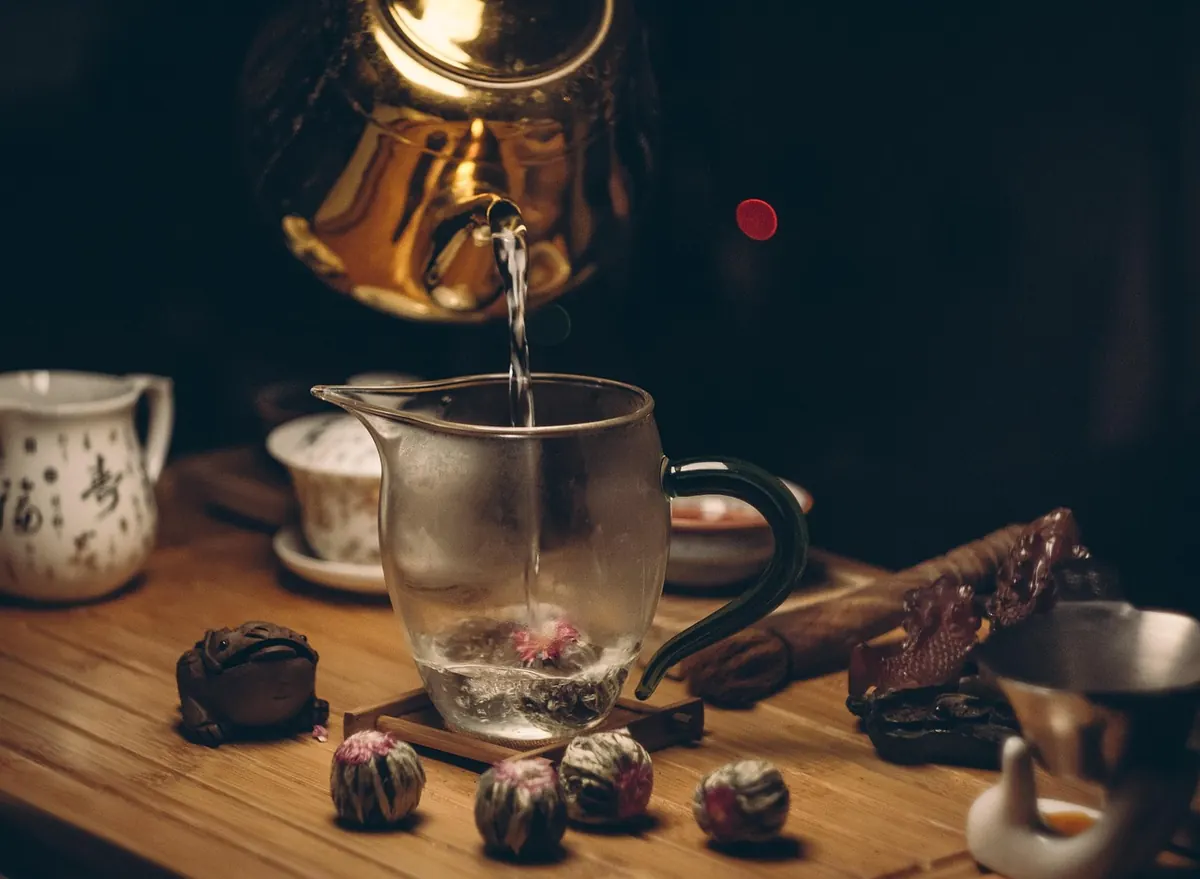
A fairness pitcher, a scale, a tea pet, a bamboo table, a dedicated shelf of clay pots. All of these are pleasant. None of them are why the tea tastes good. A kitchen scale is worth borrowing, though, because guessing leaf weight is the fastest way to a bitter cup.
Pacing: Infusions, Not Cups
Think in rounds. Each round is a pour, and each pour is short.
Start with a generous amount of leaf — roughly one gram for every 20 to 30 ml of water, which for a 120 ml gaiwan means something like four to six grams. With rolled oolongs and compressed pu'er, that is a layer covering the bottom and climbing the sides; with loose black tea, a little less. Use water close to boiling for oolongs, black teas and pu'er. Save cooler water for greens and delicate whites.
Give the leaves a quick rinse first: fill, pour off, discard. It warms the vessel, wakes the leaf and washes away the dust of storage. Then begin.
- First infusion: 10 to 20 seconds. Pour it all out.
- Second and third: add five to ten seconds each. These are often the best cups.
- Fourth onward: add time steadily, ten seconds at a time, then more as the leaf tires.
Never leave water sitting on the leaves between pours — that is what turns a good session sour at the fifth cup. When you finish a pour, the vessel should be empty.
If a cup tastes harsh or drying, make the next one shorter. If it tastes thin and faint, give the next one more time or more heat. That single habit fixes most brewing problems.
Read the leaf, not the clock
Timings are a starting point, not law. Watch the leaves unfurl and smell the lid of the gaiwan between pours. A tea that smells rich but tastes flat usually needs hotter water. A tea that smells wonderful and tastes astringent needs less time. Ten seconds of attention beats any timer app.
Three Teas Worth Starting With
Choose leaves that forgive small mistakes and reward repetition. These three cover a wide range of flavor without punishing you.
1. A medium-roasted oolong
Look for a Dong Ding, a lightly roasted Tieguanyin, or a roasted Wuyi rock tea. These leaves are rolled tight, so they open slowly across many infusions, and the roast keeps them from turning bitter if you overshoot by a few seconds. You will taste the arc clearly: first floral and buttery, then toasted grain and stone fruit, then a mineral finish that lingers in the throat. Near-boiling water, short pours, six to ten rounds.
2. A Yunnan black tea
Dianhong is malty, sweet, and gentle — cocoa and dried fruit rather than the sharp tannin of a supermarket teabag. It does not need delicate handling: near-boiling water, five to fifteen seconds at the start, and it will still taste good if you forget it for half a minute. Expect five or six satisfying infusions and a sweet, honeyed tail end. This is the tea to brew when you want to practice without risk.
3. A ripe pu'er
Shou pu'er is dark, earthy and unusually forgiving. Rinse it twice, use fully boiling water, and start at ten seconds. Early cups taste of cocoa, dates and damp forest floor; later ones turn sweet and almost creamy, and the leaves will keep going for a dozen rounds or more. Buy from a shop that stores tea properly — if the dry leaf smells like a wet basement, walk away.
Leave young raw pu'er and delicate green teas for later. They are wonderful, and they are also much less patient with a beginner's timing.
Small Habits That Improve Everything
- Warm the cups and the brewing vessel with hot water before the first pour.
- Use water you would happily drink on its own. Tea is mostly water.
- Pour in a slow circle rather than straight down, so the leaf is evenly wetted.
- Take one note per session — tea, leaf amount, water temperature, whether you liked it. Three lines is enough.
- Keep sessions to a comfortable length. Tea contains caffeine, so if you are sensitive, brew earlier in the day and check with a doctor if you have a medical reason to limit it.
Start With One Tea, Not a Shelf of Them
Pick a single tea from the list above and brew it three times in one week. Same vessel, same water, same rough amounts. By the third session you will notice things you missed on the first: how the aroma changes between the second and fourth pour, how much difference ten seconds makes, how the leaf smells after it has given everything up. That is the skill gongfu is named for, and it costs nothing but repetition.
Buy more equipment later, if you want to. For now, what you need is a small pot, hot water, and the willingness to sit with a cup for a few minutes longer than usual.
Photo: Pexels / Pixabay