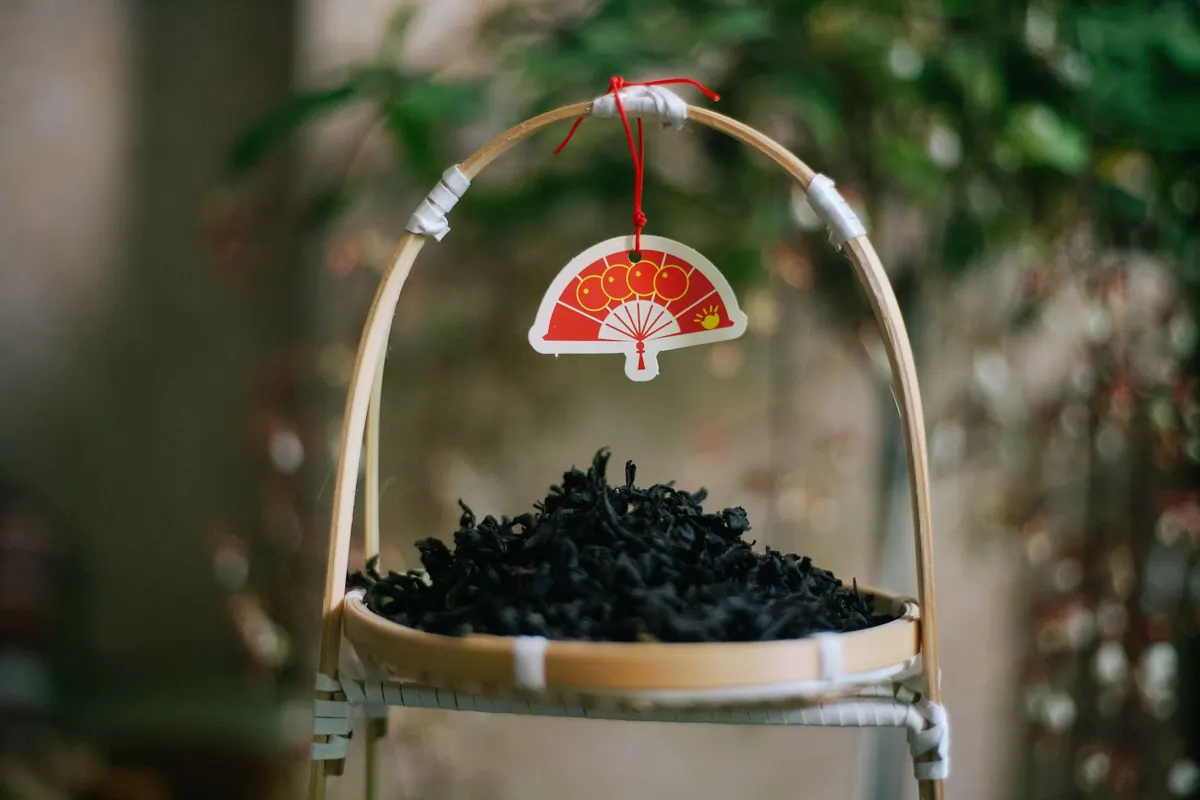
Oolong is the most rewarding tea to brew at home and the easiest to brew badly. It sits between green and black, sometimes rolled into tight jade beads, sometimes twisted into long dark strips, sometimes roasted until it smells like warm stone. That range is the point. It is also why a method that flatters one oolong can flatten another. The good news is that almost every common oolong mistake has the same shape: too little heat, too little leaf, or too much time. Fix those three tendencies and even a modest tea starts tasting like the thing you paid for.
Mistake 1: Water That Is Not Hot Enough
Years of black-tea advice — never use boiling water, it will scald the leaves — gets carried straight over to oolong, where it does real damage. Oolong is a partially oxidized tea, often tightly rolled, and those compressed beads need heat to open. Water at 180°F will coax out a pale, faintly sour liquor while half the leaf sits unfurled at the bottom of the pot.
Start with water just off a rolling boil. For lighter, greener oolongs, let the kettle rest for 30 to 60 seconds; for roasted oolongs, pour straight away. If you keep a thermometer, aim for roughly 195–205°F on the light end and 200–212°F on the roasted end. Reheat between steeps, too. A kettle that was boiling at steep one is lukewarm by steep four, and the tea goes quiet.
Mistake 2: Skimping on Leaf
A teaspoon per cup is a habit from tea bags, and oolong punishes it. These leaves are big, and many are rolled so tightly that a teaspoon barely covers the bottom of the vessel. Underleafed oolong gives you a choice between a weak cup and a bitter one, because the only way to get flavor out of too few leaves is to steep them far too long.
Use more leaf than feels reasonable, then shorten the steeps to compensate. A workable starting point is 5–7 grams of leaf per 100–120 ml of water in a small pot or gaiwan, or about 3–4 grams per 250 ml mug. If you do not own a scale, fill the vessel a third of the way with dry leaf for gongfu-style brewing and eyeball it from there. You can always dilute a strong cup with hot water. Rescuing a thin one is much harder.
Mistake 3: Steeping Too Long, Then Stopping Too Soon
Oolong is not a five-minute tea. Long steeps pull out the tannins and roast notes all at once, which is where that dry, bitter, "burnt" impression comes from — the one that makes people decide they do not like oolong.
Instead, brew short and brew often:
- Balled oolongs (tieguanyin, dong ding): 20–30 seconds for the first real steep.
- Strip oolongs (yancha, dan cong): 10–20 seconds, since the leaf opens faster.
- Later steeps: add 5–10 seconds each round rather than resetting to zero.
Expect five, six, eight infusions from good leaf. If you are brewing in a mug instead, use a shorter first steep — a minute or two — then pour the tea off the leaves into a second cup and top up with hot water when you want more. Leaving leaves sitting in water between pours is what turns a pleasant third steep into a harsh fourth.
Read the leaves, not the clock
Timers are training wheels. After a few sessions you will notice the signs: the liquor darkening, the aroma shifting from floral to toasty to something flatter. Taste at the short end of your estimate and add time if it needs it. Palates and leaf sizes vary more than any recipe can account for.
Mistake 4: Skipping the Preheat and the Rinse
A cold gaiwan or teapot steals heat from the first pour, and the first pour is where a lot of the good aromatics live. Fill your vessel with hot water, let it sit while the kettle comes back up, then empty it. Warm the cups the same way. It takes twenty seconds and changes the cup noticeably.
The rinse matters just as much for rolled oolongs. Pour hot water over the leaves, swirl briefly, and discard that liquid after about five seconds. You are not washing away dirt so much as waking the leaf up and letting the tight beads begin to relax. For heavily roasted teas, the rinse also carries off some of the sharper surface roast, so the first steep you actually drink tastes rounder.
Mistake 5: Treating Every Oolong the Same Way
This is the mistake that hides behind the other four. A delicate, lightly oxidized bao zhong and a dark, charcoal-roasted yancha want different treatment.
Light oolongs do best slightly cooler, with gentler steeps, and they fade faster — four or five good infusions is normal. Roasted oolongs take full boiling water and often taste better at steep three than steep one, as the roast settles and the fruit underneath comes forward. Dan cong is the aromatic show-off of the family: high heat, very quick steeps, and a firm hand, because it turns bitter in a hurry if you walk away.
Milk and sugar are another place where oolong rewards restraint. A floral, high-mountain oolong with milk tastes like vaguely sweet nothing. If you want a milk tea, choose a heavily roasted or charcoal-baked oolong, which has the body to stand up to it.
A Starting Recipe You Can Adjust
- Boil fresh, filtered water. Very hard or heavily chlorinated water will flatten any tea.
- Preheat your pot or gaiwan, then discard that water.
- Add 5–7 g leaf per 100–120 ml, or 3–4 g for a 250 ml mug.
- Rinse the leaves with hot water for about five seconds and pour it off.
- Steep 20–25 seconds for balled oolong, 10–15 for strip.
- Pour off completely. Taste. Add 5–10 seconds for each subsequent steep.
- Stop when the tea tastes like warm water, or when it turns sharp.
Change One Thing at a Time
The fastest way to improve is not to buy better tea. It is to brew the tea you already have three times, changing a single variable each round: hotter water, then more leaf, then a shorter steep. Keep a few notes on your phone — leaf weight, temperature, seconds — and within a week you will have a personal recipe that works in your kitchen, with your kettle and your water.
Keep expectations reasonable, too. Not every oolong will give you eight glorious infusions, and a mediocre cup is not a failure; it is information. Oolong has caffeine, so if you are sensitive to it or pregnant, treat a long session of small steeps the way you would any caffeinated drink and check with a healthcare provider if you are unsure.
Brew it hot, brew it strong, and take it off the leaf sooner than you think. That single sentence solves most of what goes wrong.
Photo: ivi nnnnnn / Pexels